Author Archives: Kavuklis

Das politische Europa: Unterrichtseinheit für Grundschüler/innen

Europapolitik kann Spaß machen!

EA BerlinDie Europäische Akademie Berlin hat eine Unterrichtseinheit zum Thema “Europa” für Grundschüler(innen) entwickelt.

Was ist überhaupt Europa? Und vor allem – warum lohnt es sich, das zu wissen? Was tun die Politiker in der EU? Und – warum lohnt es sich, mitzureden?

Das sind die Kernfragen, die wir in selbst erprobten Rollenspielen und Diskussionen, beim Ausmalen und Verkosten europäischer Spezialitäten aus dem Supermarkt um die Ecke mit Schülerinnen und Schülern der Klassen 1 bis 3 erörtern wollen. Was unsere Unterrichtseinheit auszeichnet? Sie ist nicht belehrend – sie macht den Kids Spaß!

EA Berlin - Das politische Europa: Unterrichtseinheit
EA Berlin - Das politische Europa: Begleitbrief Lehrer/innen
EA Berlin - Das politische Europa: Begleitbrief Eltern

Apply for EAEA Grundtvig Award 2014

EAEA Grundtvig Award 2014Each year, the European Association for the Education of Adults (EAEA) celebrates innovation and excellence in adult education. The EAEA Grundtvig Award highlights project results that produce new ideas, new partnerships, new methodologies and a new understanding of how we can work in adult learning.

The 2014 topic is: Remembering World War I for the Future – Adult Education promoting Peace and Cohesion in Europe

Deadline for application is September 7th 2014

Read more on how to apply and what to gain out of the competition.

European Parliament President Martin Schulz pledges support for EYCA recommendations and civil dialogue in Europe

European Year of Citizens Alliance 2013Representatives of the European Year of Citizens Alliance (EYCA) Steering Committee met with the President of the European Parliament, Martin Schulz, on 3rd April 2014 in Brussels to discuss the EYCA recommendations aimed at enhancing European citizenship.

We raised a particular warning about the profound social and economic distress, but also the political distrust Europe is facing today. Deploring the institutional appetite for direct dialogue with “THE” citizen, we called for the recognition of associations and NGOs in their capacity of gathering together millions of citizens across Europe and for their involvement on equal footing with trade-unions and businesses in the policy dialogue and democratic processes.

Convinced that “Europe can no longer survive without a social pillar”, President Schulz pointed out the real risk of Europe’s failure, as highlighted by the lead in opinion polls from Eurosceptic and regressive forces, even in some founding Member States.

Aware that civil society organisations can be “valuable allies” for the institutions in working to bring about more solidarity, equality and democracy in Europe, and paying due attention to the EYCA recommendations, Mr. Schulz undertook to “seriously consider the issue and leave a strong legacy for his successor to integrate civil society organisations in a dialogue process with the European Parliament”.

This position goes totally in line with article 11 from the Treaty on the Functioning of the European Union, which underlines the need for “institutions to maintain an open, transparent and regular dialogue with representative associations and civil society”. We can therefore only welcome President Schulz’ will to make civil dialogue a reality and hope that this discussion will bear fruits and continue to work towards a more transparent and democratic Europe.

European Year of Citizens Alliance

It’s about Us, It’s about Europe! Towards Democratic European Citizenship!

World Forum of Democracy 2014 – call for lab submissions

World Forum of Democracy 2014The third World Forum for DemocracyFrom participation to influence: can youth revitalise democracy?” will be held in Strasbourg (France) from 3-5 November 2014.

The Strasbourg World Forum for Democracy is an annual gathering of leaders, opinion-makers, civil society activists, representatives of business, academia, media and professional groups to debate key challenges for democracies worldwide. The insights gathered during the World Forum meetings inform the work of the Council of Europe and its numerous partners in the field of democracy and democratic governance.

The SWFD 2014 will engage with young people and with decision-makers and opinion-formers in a reflection on new ways of engaging young people in re-visioning the democratic arenas of today and on how to mobilise the potential of youth as actors of positive change.

Interested organisations worldwide are invited to express their interest in presenting an example/initiative enabling youth participation by answering the questionnaire below and sending it to forum_democracy@coe.int by 30 April 2014.

Journal “bildung für europa”: Erasmus+

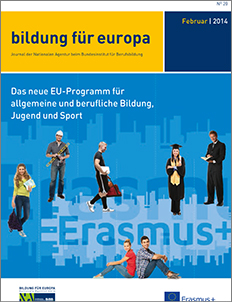
journal_20_titel_232In der aktuellen Ausgabe des Journals “bildung für europa” unterstreichen Bundesbildungsministerin Wanka, EU-Parlamentspräsident Schulz und EU-Kommissarin Vassiliou in ihren Grußworten die politische Bedeutung des neuen Programms und erläutern seine Zielsetzungen. In weiteren Beiträgen stellen die für die Umsetzung des Programms zuständigen Nationalen Agenturen die verschiedenen Kapitel und Bereiche von Erasmus+ vor und informieren über das neue Antragsverfahren.

Ferner berichtet das Journal über neue Aufgaben und Strukturen in der NA beim BIBB, über die noch laufende Abwicklung des Programms für lebenslanges Lernen sowie über das neue ECVET Mobility Toolkit, dem Instrumentenkoffer zur Qualitätssicherung von Mobilitätsprojekten.

Besonderer Service der aktuellen Ausgabe: Das neue Programm im Überblick als Plakat sowie ein zwölfseitiger Einleger “Die Europäische Agenda Erwachsenenbildung – Ziele und Umsetzung”.

Das Journal zum Blättern | Herunterladen | Bestellen | Abonnieren