Category Archives: General

The Structure of the European Education Systems 2016/17

the-structure-of-the-european-educationn-systemsThis report provides information on the structure of mainstream education in European countries from pre-primary to tertiary level for the 2016/17 school and academic year.

It includes national schematic diagrams, an explanatory guide and maps showing the main organisational models of pre-primary and compulsory education. The information is available for 43 European education systems covering 38 countries participating in the EU’s Erasmus+ programme.

Consultation on Inclusive Education: Civil Society Day 2016 Outcomes

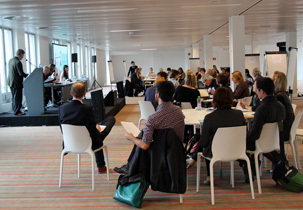
civil-society-day-2016The Civil Society Day, co-organised by the European Commission Directorate General for Education, Culture, Youth and Sports and the Lifelong Learning Platform, was held on 19 October in Brussels, as introduction to the Education, Training and Youth Forum (20-21 October).

This year’s focus was on “Inclusive education”, a concept that reveals the transformative effect of education on society as a whole. However, this effect requires mainstreaming the concept through all areas of education, involving the many educational actors – representing formal, non-formal and informal sectors – in a dialogue with the institutions to develop effective educational policies.
Participants reflected on the meaning of inclusiveness in education through the prism of learning objectives, content and methods; learning environments and their link with the non- formal sector; the role of educators and school leaders; and finally, seeking the optimal governance system to ensure a comprehensive approach.

The key messages are available in the Civil Society Day 2016 – Inclusive Education Consultation Outcomes

Consumer Classroom Inter-school Competition 2016-2017

consumer classroomNowadays, pupils are familiar with the global fight against climate change towards a more sustainable world. Many of them are wise consumers in the fight against this world challenge, they have learned how to minimize waste and save water.
But are they aware of their impact as energy consumers? Young people won’t become wise consumers unless they learn how to improve their energy consumption.
The aim of this competition is to bring together secondary school teachers in Europe to create an innovative online project with their students on “Smart Energy Consumption”. So find out more, spread the word and register before 17 March 2017.

Education and Training Monitor 2016

education-and-training-monitor-2016The Education and Training Monitor is an annual publication that captures the evolution of education and training in the EU. It contributes to the objectives of the EU strategic framework for cooperation in education and training, the overall Commission’s strategy for growth and employment and the European Semester cycle of economic policy co-ordination.

The Monitor charts EU and country progress towards:

  • Europe 2020 targets on early school leaving and tertiary educational attainment
  • Education and Training 2020 benchmarks in participation in early childhood education and care, adult learning, underachievement in basic skills, and employability of recent graduates
  • Cross-cutting priority themes, such as financing of education and professional development of teachers

The Education and Training Monitor 2016 is available online accompanied by 28 in-depth country reports and numerous interactive maps.

Education and Training Monitor 2016

Read the Lifelong Learning Platforms Press Release on the Education and Training Monitor 2016

EU by Citizens – your opinion needed

EU by CitizensThe Maison de l’Europe de Paris, together with 10 European partners, is running the project “EU by Citizens”. The goal is to give the keys for a better understanding of European history and current European policies in order to better involve the citizens in the democratic process.
To this end, experts from civil society debate in several countries with citizens representatives on three topics: the history of the European Union, its values, and the impact of European policies in daily life. They write together a booklet entitled “The European Union seen by the European citizens”.

If you want to improve the data for EU by Citizens and contribute to the project, please be so kind and answer three questions in the online form. It will take you less than a minute!

Get more information on the project’s website and follow it on facebook.