Author Archives: Kavuklis

Europe Direct Information Centres: useful or only EU propaganda?

Europe DirectThe network of some 500 walk-in offices known as Europe Direct Information Centres  is one of the main tools of the European Commission to engage with citizens on EU-related topics at local and regional level. 12 Million Euro were spend on grants for these information centres in 2015.

The European Commission now wants to know in a public consultation if it is worth the effort and money. The consultation is part of the mid-term evaluation of the Europe Direct Information Centres and will have a direct impact on their future role and funding.

A significant number of our members are also acting as a Europe Direct Information Centre. Therefore we strongly encourage you to take part in the public consultation and express your opinion.

The consultation is open until May 4th 2016 and available in English, German and French. The remaining EU languages will be added on 19.02.2016.

Take part! Public consultation on Europe Direct Information Centres

LLLPlatform: Taking Validation One Step Further

Lifelong Learning PlatformEuropean societies are facing numerous challenges such as rising unemployment and inequalities. The 2013 PIAAC report highlights the fact that 20% of the EU adult population have low literacy and numeracy skills. If the correlation between education and employment and especially to quality employment as well as to poverty is well known, one’s qualification does not always correspond to one’s knowledge, skills and competences. The lack of strong validation systems that allow for individual’s knowledge, skills and competences which have been acquired through non-formal and informal learning to be validated, only makes it more difficult to tackle unemployment and poverty in the EU.

The 2012 Council Recommendation on the validation of non-formal and informal learning (VNIL) is a first step towards more satisfactory validation policy frameworks in the EU. It gave a political impulse for Member States to speed up the building of well-functioning validation systems in partnership with stakeholders. However, according to the CEDEFOP 2014 European Inventory on Validation, “most countries need to further develop their practical validation arrangements”.

The Lifelong Learning Platform proposes 5 key success factors for the implementation of VNIL:
1. Long-term and sustainable strategies for validation
2. Overcoming resistance: towards a cultural shift
3. Reaching out to disadvantaged group
4. Guidance, counseling and information
5. The EU’s role in a successful implementation of VNIL

Position Paper: Taking Validation One Step Further

No Hate Speech Movement

no hate speech movementA youth campaign of the Council of Europe for human rights online, to reduce the levels of acceptance of hate speech and to develop online youth participation and citizenship, including in Internet governance processes.

The working methods are awareness raising, advocacy, and it also seeks for creative solutions. It is a project for action and intervention. The project equips young people and youth organisations with the competences necessary to recognize and act against such human rights violations.

More needed than ever.

No Hate Speech Movement

Haben die Spanier beim Handball verloren, weil sie die Nationalhymne nicht mitgesungen haben?

Die gestellte Frage lässt sich mit einem klaren ”Nein” beantworten. Die spanische Nationalhymne hat nämlich gar keinen Text, mithin kann man ihn auch nicht mitsingen.

Die letzten und die kommenden Sportereignisse werden aber den Blick wieder auf die Nationalhymnen der teilnehmenden Staaten richten. Sie sind auch ein guter Einstieg, um sich mit europäischen Fragen zu befassen.
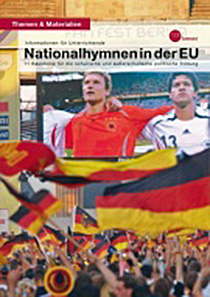
Nationalhymnen in der EUDie Bundeszentrale für politische Bildung hat zum Thema Nationalhymnen Elf Bausteine für die schulische und außerschulische Bildung erarbeiten lassen. Die wissenschaftliche Gesamtleitung dieses Projekts lag bei unserem Mitglied Europäische Akademie Berlin.

Sich mit den Nationalhymnen zu befassen, lohnt sich – aus musikalischer, sprachlicher und politikwissenschaftlicher Sicht. Unterschiedliche Musikstile und Inhalte, die in sehr verschiedenen Kontexten entstanden sind, kommen hier zusammen. Über die Beschäftigung mit den Melodien und den Texten hinaus bieten die Nationalhymnen einen alternativen und ganz positiven emotionalen Ansatz, um sich mit den Staaten der EU zu befassen: Die Annäherung an die Nachbarn findet nicht über Statistiken oder Institutionen statt, sondern über die Musik. Dadurch wird hör- und erfahrbar, welche Vielfalt die EU vereint. Musik, Sprache, Landeskunde, politische Reflexion – für jede und jeden ist etwas dabei.
Die Beschäftigung mit Nationalhymnen eignet sich deshalb besonders für den Unterricht. Das Anspruchsniveau der Bausteine reicht von der Grundschule bis hin zur Sekundarstufe II.

Die schlanke Broschüre enthält gedruckt die Informationen für die Lehrkraft. Alle Materialien für Unterricht, Recherche, Präsentation und Ausdruck, darunter ein umfangreicher lexikalischer Teil zu den Hymnen mit Entstehungsgeschichten, Hymnentext und erstmals auch Noten (Klavierauszug), sind auf einer beigefügten CD-ROM enthalten. Hinzu kommen eingebundene Audiofiles mit Instrumentalfassungen der Hymnen. Die PDF lassen sich mittels Beamer bzw. auf dem Whiteboard nutzen oder einzeln ausdrucken. Offene Dateien ermöglichen die Anpassung der Schüler-Arbeitsaufgaben an die jeweiligen Rahmenbedingungen.

Sie finden alle Informationen über den Band hier:

http://www.bpb.de/shop/lernen/themen-und-materialien/218361/nationalhymnen-in-der-eu

Education and Training Monitor 2015

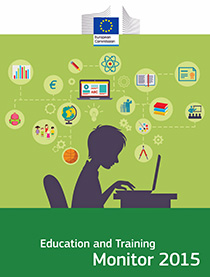
Education and Training Monitor 2015The Education and Training Monitor is an annual series that captures the evolution of Europe’s education and training systems by bringing together a wide array of evidence in one digestible report.

The Education and Training Monitor 2015 puts the spotlight on education priorities most in need of investment and identifies policies that help improve the inclusiveness, quality and relevance of Europe’s education and training systems.

The European Commission has published the fourth annual edition of the Education and Training Monitor. The full report includes a ten-page summary that combines cross-national and country-specific findings.

The Education and Training Monitor 2015 is accompanied by twenty-eight in-depth country reports that complement the cross-national analysis with country-specific data and information on policy measures and the latest reforms. A set of one-page summaries of the country reports can be downloaded: ETM 2015 one-page summaries of the country reports

Various interactive maps have been created to evaluate the performance and progress of the Member States in relation to the ET 2020 targets.

Education and Training Monitor 2015