Author Archives: Kavuklis

Public consultation on EU Citizenship

EU Citizenship_public_consultation_flyerAre you a citizen of an EU country? Then you are also a citizen of the European Union!
This gives you a number of key rights, such as the right to move and reside freely in the EU; or the right to vote and stand as a candidate in European and municipal elections in another EU country where you live, under the same conditions as citizens of that country. Your EU citizenship also guarantees that you cannot be discriminated against because of your nationality.
The European Commission is now asking for your views on how these rights can be strengthened. Here is your chance as a European citizen to have your say: tell us what matters to you and how things can be made better. Voice your opinion and help shape how the EU should work to make your daily life easier.

You can fill out the questionnaire online until 7 December 2015 at https://ec.europa.eu/eusurvey/runner/EUCitizenship
“Was ging?” Das Heft über Geschichte

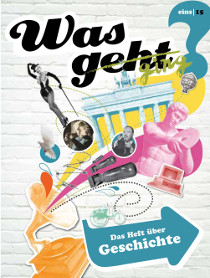
Was geht GeschichteMit dieser Ausgabe von Was geht? soll Jugendlichen gezeigt werden, was spannend an Geschichte ist und welche Auswirkungen vergangene Geschehnisse auf das heutige Leben haben können. Als Einstieg dient ein Quiz, bei dem den Jugendlichen anhand von lebensnahen Beispielen deutlich wird, wie facettenreich ihnen Geschichte im Alltag begegnen kann.

Die Was geht?-Hefte zielen darauf ab, junge Menschen mit einem altersgerechten Format, einer ansprechenden grafischen Gestaltung und einer persönlichen, emotionalen Ansprache für Themen der politischen Bildung zu sensibilisieren. Darüber hinaus werden den Jugendlichen wichtige weiterführende Informationen und Tipps an die Hand gegeben (relevante Daten, Links, Clips etc.).

"Was ging?" Das Heft über Geschichte
Begleitheft für Pädagogen "Was ging?" Das Heft über Geschichte

Eurydice Report: Languages in Secondary Education

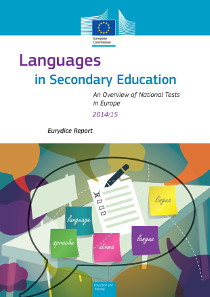
Languages in secondary educationThis Eurydice report addresses these questions by providing a comparative overview of the national tests in Europe assessing the language competences of secondary school students.
The analysis covers aspects such as the increasing importance of national tests in languages, the objectives of the tests, the skills tested, as well as the means developed by countries aiming at ensuring consistent and reliable scoring procedures, and the influence of the Common European Framework of Reference for Languages (CEFR) on national tests.

The report includes the 28 EU Member States, Iceland, Liechtenstein, Norway, Turkey, Montenegro and Serbia. The reference year is 2014/15.

Full Report: Languages in Secondary Education
Highlights Report: Languages in Secondary Education
E-book Report: Languages in Secondary Education

EU youth report 2015

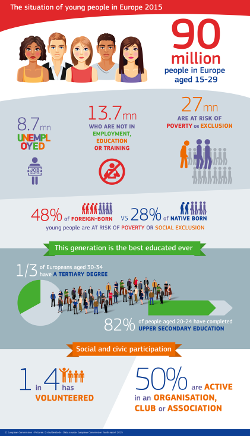
youth-report-infographicThe European Commission presented the EU Youth Report 2015 that draws a full picture of the situation of young people in Europe and how policymakers have addressed it in the period 2013-2015.


The EU Youth Report reveals that generally young people are better educated than their predecessors and less young people drop out of school in the EU. Yet, 8.7 million young people aged 15-29 are unemployed, 13.7 million are not in employment, education or training (NEETs) and close to 27 million are at risk of poverty or exclusion. “NEETs” tend to participate less in social activities, vote less and have less trust in institutions. Young people are active users of Internet and social media. Around half are active members of organisations. One in four has been a volunteer.

Since 2013, the EU and Member States have taken action to support young people, particularly to help them find a job. Yet, the dire situation of young people and the need to counter risks of exclusion, marginalisation or violent radicalisation, calls for giving priority to integration in society, with the ultimate purpose of allowing all young people to become active and engaged members in society. This requires more systematic cooperation across policies and actors under a comprehensive approach that reflects the scale of the challenge ahead. There is a particular need to reinforce links with sports and education in order to increase social inclusion and increase youth competences and employability. It is thereby essential to give young people a strong political voice in the process.

The Erasmus+ programme and other EU instruments will underpin policy efforts. Erasmus+ will dedicate greater funding to inclusion, citizenship and intercultural dialogue as from 2016.

Interested in joining a free online-course on Europe?

Certificate iversityThe free online course on “Regions, EU institutions and policy-making” is designed for local and regional authorities but is open to all those interested in the EU, its regions and cities.

Over the period of eight weeks about 50 politicians, experts and academics will discuss topics of interest to local and regional authorities such as EU cohesion policy, smart specialisation, migration and access to EU programmes – among others.

The course, which starts on October 19th, involves videos, factsheets and live debates to be web-streamed from the Committee of the Regions, plus a social forum for exchange and feedback. Those who finish 80% of the course can receive a Statement of Participation.

Registration is now open