Category Archives: General

Survey on Civic Space in Europe

Civil Society EuropeCivil Society Europe and Civicus, the World Alliance for Citizen’s participation are launching a survey open to associations and leading activists in the European Union, Iceland, Liechtenstein, Norway, and Switzerland, and the candidate countries to the EU Accession: Albania, the Former Yugoslav Republic of Macedonia, Montenegro, Serbia and Turkey.

The purpose of the survey is  to map out key trends on civic space in Europe.
Given recent developments, the survey will allow us to assess how operating conditions for civil society have changed in Europe over the past 12 months, what are the emerging trends and challenges that civil society organisations have to face, as well as the possibility to develop common responses. The survey deals with civic space, civil society collaboration and support, obstacles and challenges facing civil society at national level and broader political trends in Europe.

In order to ensure the broadest possible range of views, we would like to invite you to disseminate the survey widely.
The findings will be made freely available for your information and use. All responses will be confidential, will not be shared with third parties and will be analysed as a collective dataset.

The survey includes 30 questions and should not take more than 15 minutes.

https://www.surveymonkey.co.uk/r/Civic_Space_In_Europe_ENG

https://www.surveymonkey.co.uk/r/Lespace_civique_en_Europe_FR

If you have any problems submitting your information or if you require a printable copy, please contact civicpulse@civicus.org .

Please respond by 15 February 2016

EUNET is member of Civil Society Europe.

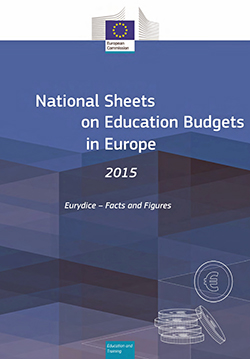
National Sheets on Education Budgets in Europe – 2015

National Sheets on Education Budgets in Europe – 2015Investment in education is one of Europe 2020 strategy’s priority areas.
However, the lack of up-to-date information in Europe on public funding in education makes it difficult to assess and discuss the current changes in public investment in the education sector, to pinpoint the reasons of these changes, and to analyse budget reforms launched by countries.

In this context, Eurydice publishes the report on Education Budgets in Europe for 2015 which provides the most recent data on planned education budgets by country.
It makes it possible to identify variations in education budgets within a country between 2014 and 2015.

National Sheets on Education Budgets in Europe – 2015

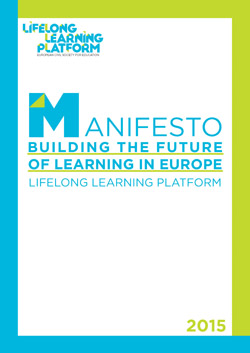
“Building the future of learning”, the LLLPlatform’s new Manifesto

Manifesto LLLplatform Building the future of learningThe LLLWeek2015 was the opportunity for the LLLPlatform to launch its new Manifesto on Building the future of learning in Europe. ”A humanistic and holistic approach of learning, from cradle to grave, is of continued relevance in today’s world and a viable foundation for the rethinking of education in knowledge intensive societies”.

After the launch of its new visual identity and name in the context of its 10th anniversary, the Lifelong Learning Platform is proud to share its political Manifesto. Fed by all its members during a one-year consultation process, it is a call to policy-makers and educational actors from all over Europe to take action to make lifelong learning a reality for all!

EUNET is member of the Lifelong Learning Platform.

Manifesto "Building the future of learning"

Erasmus+ Survey Results 2015: now available!

LLL-Platform Erasmus+ Survey reportAfter the success of its 2014 broad public consultation, the Lifelong Learning Platform launched its 2015 Erasmus+ implementation survey on the 3rd of July. The purpose of this year’s survey was to evaluate how beneficiaries experienced the 2nd round of applications of the Erasmus+ programme. The consultation was closed on the 15th of September after having received 275 answers.

The results show how beneficiaries of the Programme value the Erasmus+ as a great opportunity to work with their peers’ across Europe. The Survey aims to provide decision-makers an evaluation, from its direct beneficiaries, on what works and what could be improved.
The beneficiaries particularly appreciate that the objectives and selection criteria of the Programme are relevant, the simplified architecture of the Programme and the use of lump sums.
However some figures are striking such as the fact that only 6% of respondents believe that the rules are applied in a harmonised ways across National Agencies, that the Programme Guide lacks clarity on important aspects such as the Intellectual Outputs or that the calculation of flat rates appears for many as insufficient and even unjust.

Read the full report: Erasmus+ Survey Results 2015