Category Archives: General

Public opinion in the EU regions

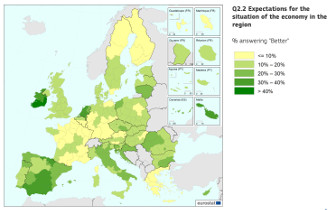
Public opinion in the EU regionsOn 26th October Eurobarometer published a public opinion survey of the European regions regarding the EU. This survey offers a very detailed view of the European public opinion at regional level (209 regions).
It was designed to explore views of Europeans at regional level on the following topics:

  • The current quality of life and economic situation
  • The expectations regarding quality of life and the economy
  • Main concerns facing regions
  • Perception of the European Union
  • Trust in the EU
  • Representatives best placed to explain the EU
Flash Eurobarometer Public opinion in the EU regions

Erasmus+ 2016 Guide and Call published

Erasmus plusThe Erasmus+ Programme Guide and Call for Proposals for 2016 is out with more than €1.85 billion in funding available.

The main changes are:

  • New opportunities in Vocational Education and Training Mobility (possibility for organisations to apply for mobility projects with and without a VET Charter)
  • More targeted Strategic Partnerships (clearer distinction between projects supporting innovation and supporting exchange of best practices.
  • Revised format of Sector Skills Alliances: two strands supporting needs identification and design and delivery of VET
  • New opportunities in sport: Small Collaborative Partnerships.

Throughout the Guide, a special focus is put on encouraging projects supporting social inclusion (notably of refugees and migrants), as well as preventing radicalisation.

Erasmus+ Programme Guide 2016
Education, Audiovisual and Culture Executive Agency

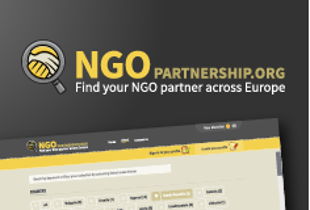
NGOpartnership – Find your NGO partner across Europe

NGO partnershipDo you often have trouble finding the right project partner or wonder about the fastest and most efficient way to do this? Are you a public sector entity or a private company who wants to carry out a project in cooperation with NGOs, but just does not have the right information about all the possibilities that are out there?  Do you have the right project idea to apply for a call for proposals and a clear picture of what your project partner should be like, but are unfamiliar with the sector in the countries in which you are looking for partners?

These are the reasons why our colleagues from ENNA have created the web database of non-governmental organisations ( NGOpartnership ) from all over Europe who are interested in international project partnerships. NGOs can create their own profiles with their contact information, references and areas of interest and thereby inform a wide circle of potential partners about their activity. Interested project partners can then easily and quickly find the NGO which suits their needs and requirements.

The use of the portal is free. Register your profile and/or search for your partner in the database!

http://ngopartnership.org/

Public consultation on EU Citizenship

EU Citizenship_public_consultation_flyerAre you a citizen of an EU country? Then you are also a citizen of the European Union!
This gives you a number of key rights, such as the right to move and reside freely in the EU; or the right to vote and stand as a candidate in European and municipal elections in another EU country where you live, under the same conditions as citizens of that country. Your EU citizenship also guarantees that you cannot be discriminated against because of your nationality.
The European Commission is now asking for your views on how these rights can be strengthened. Here is your chance as a European citizen to have your say: tell us what matters to you and how things can be made better. Voice your opinion and help shape how the EU should work to make your daily life easier.

You can fill out the questionnaire online until 7 December 2015 at https://ec.europa.eu/eusurvey/runner/EUCitizenship

“Was ging?” Das Heft über Geschichte

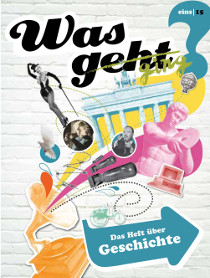
Was geht GeschichteMit dieser Ausgabe von Was geht? soll Jugendlichen gezeigt werden, was spannend an Geschichte ist und welche Auswirkungen vergangene Geschehnisse auf das heutige Leben haben können. Als Einstieg dient ein Quiz, bei dem den Jugendlichen anhand von lebensnahen Beispielen deutlich wird, wie facettenreich ihnen Geschichte im Alltag begegnen kann.

Die Was geht?-Hefte zielen darauf ab, junge Menschen mit einem altersgerechten Format, einer ansprechenden grafischen Gestaltung und einer persönlichen, emotionalen Ansprache für Themen der politischen Bildung zu sensibilisieren. Darüber hinaus werden den Jugendlichen wichtige weiterführende Informationen und Tipps an die Hand gegeben (relevante Daten, Links, Clips etc.).

"Was ging?" Das Heft über Geschichte
Begleitheft für Pädagogen "Was ging?" Das Heft über Geschichte