Category Archives: General

Eurydice Report: Languages in Secondary Education

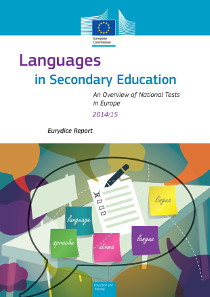
Languages in secondary educationThis Eurydice report addresses these questions by providing a comparative overview of the national tests in Europe assessing the language competences of secondary school students.
The analysis covers aspects such as the increasing importance of national tests in languages, the objectives of the tests, the skills tested, as well as the means developed by countries aiming at ensuring consistent and reliable scoring procedures, and the influence of the Common European Framework of Reference for Languages (CEFR) on national tests.

The report includes the 28 EU Member States, Iceland, Liechtenstein, Norway, Turkey, Montenegro and Serbia. The reference year is 2014/15.

Full Report: Languages in Secondary Education
Highlights Report: Languages in Secondary Education
E-book Report: Languages in Secondary Education

EU youth report 2015

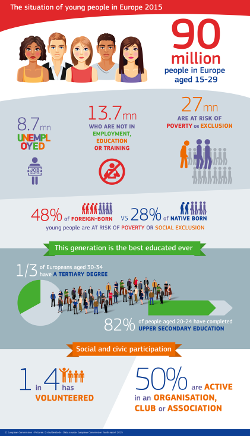
youth-report-infographicThe European Commission presented the EU Youth Report 2015 that draws a full picture of the situation of young people in Europe and how policymakers have addressed it in the period 2013-2015.


The EU Youth Report reveals that generally young people are better educated than their predecessors and less young people drop out of school in the EU. Yet, 8.7 million young people aged 15-29 are unemployed, 13.7 million are not in employment, education or training (NEETs) and close to 27 million are at risk of poverty or exclusion. “NEETs” tend to participate less in social activities, vote less and have less trust in institutions. Young people are active users of Internet and social media. Around half are active members of organisations. One in four has been a volunteer.

Since 2013, the EU and Member States have taken action to support young people, particularly to help them find a job. Yet, the dire situation of young people and the need to counter risks of exclusion, marginalisation or violent radicalisation, calls for giving priority to integration in society, with the ultimate purpose of allowing all young people to become active and engaged members in society. This requires more systematic cooperation across policies and actors under a comprehensive approach that reflects the scale of the challenge ahead. There is a particular need to reinforce links with sports and education in order to increase social inclusion and increase youth competences and employability. It is thereby essential to give young people a strong political voice in the process.

The Erasmus+ programme and other EU instruments will underpin policy efforts. Erasmus+ will dedicate greater funding to inclusion, citizenship and intercultural dialogue as from 2016.

Interested in joining a free online-course on Europe?

Certificate iversityThe free online course on “Regions, EU institutions and policy-making” is designed for local and regional authorities but is open to all those interested in the EU, its regions and cities.

Over the period of eight weeks about 50 politicians, experts and academics will discuss topics of interest to local and regional authorities such as EU cohesion policy, smart specialisation, migration and access to EU programmes – among others.

The course, which starts on October 19th, involves videos, factsheets and live debates to be web-streamed from the Committee of the Regions, plus a social forum for exchange and feedback. Those who finish 80% of the course can receive a Statement of Participation.

Registration is now open

Didaktik der inklusiven politischen Bildung

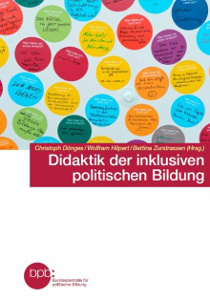
Didaktik der inklusiven politischen BildungDie Publikation Didaktik der inklusiven politischen Bildung der Bundeszentrale für politische Bildung geht der Frage nach, wie durch politische Bildung, inklusiv geplant und gestaltet, die politische Teilhabe aller ermöglicht werden kann. Denn Inklusion ist ein Menschenrecht, eine Aufgabe für alle.

Der Fokus liegt auf der Förderung der Politikkompetenz von Menschen mit Lernschwierigkeiten.

Didaktik der inklusiven politischen Bildung

Inclusion and Citizenship at the forefront of new EU priorities in education

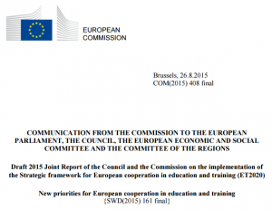
ET 2020 Draft Joint Report 2015EU action and Member States’ cooperation in the field of education and training is framed in a work programme – the Education and Training 2020 Strategic Framework (ET2020), which contains four strategic objectives and seven benchmarks.
Following a mid-term evaluation, the Draft 2015 Joint Report of the ET2020 proposes new work priorities up to 2020. Highlighting the need to pursue a comprehensive lifelong learning approach, from early childhood education to adult education, the report rightly stresses the role played by education to contribute to employment and growth objectives as well as to building a fairer and more cohesive and democratic society.

EUNET also welcomes the emphasis being placed on good governance and the need to reinforce partnerships with social partners and civil society. It thus supports its formal adoption by the Education Council in November.

Read the EUCIS-LLL press release on the Draft 2015 Joint Report.
ET2020 Draft 2015 Joint Report