Category Archives: General

The history of the European elections (1952–2014)

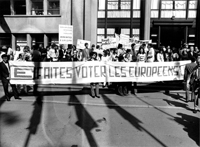
Source: Manifestation pour l'Europe. Strasbourg: Photothèque Parlement européen, 1972. Noir et blanc. Copyright: Photo Parlement européen

Source: Manifestation pour l’Europe. Strasbourg: Photothèque Parlement européen, 1972. Noir et blanc.
Copyright: Photo Parlement européen

In view of the forthcoming European elections (22–25 May 2014), the CVCE has compiled a selection of resources (explanatory texts, photos and graphics) and oral accounts on the European Parliament from its establishment in 1952 to the present day. In this way, the CVCE hopes to help improve public awareness of the European Parliament and contribute to a greater understanding of the issues surrounding the European elections.

For further information, consult CVCEs special page on the history of the European elections.

Assessment of and lessons learnt during the 7th Legislature of the European Parliament 2009-2014

Logo Foundation Robert SchumanFour weeks before the European Elections (22nd-25th May), the Robert Schuman Foundation has published an assessment of the 7th legislature of the European Parliament (2009-2014).

This study highlights data published in the mid-mandate assessment undertaken at the beginning of 2012. The balance of power between political groups, an analysis of the quantitative action taken by parliament and the national delegations’ work are assessed. This is followed by an evaluation of the major issues that have marked this term.

Assessment of and lessons learnt during the 7th Legislature of the European Parliament 2009-2014

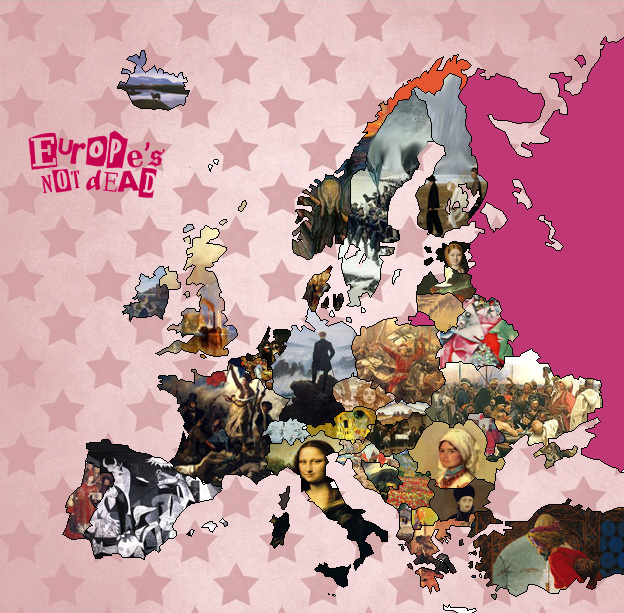
European Paintings

There is in every European’s mind the image of a painting which bears a peculiar importance in his national history. Some of those paintings could be found on national banknotes, others still figure on postcards, in adverts or on CD covers. There was the need to reconstitute a European overview on our collective patrimony. When Picasso meets Turner or Delacroix, when Rembrandt appears closed to Munch, Bruegel, Klee or Klimt, this is the expression of a rich culture which can’t remain divided in isolated areas.

This list of European renowned paintings offers you the opportunity to appreciate our European inheritance.

European Paintings

The “Europe for Citizens” funding programme for the period 2014-2020 is officially adopted

Europe for Citizens 2014On April 15th, the Council of the European Union has unanimously adopted the Regulation setting up the ‘Europe for Citizens’ programme for the period 2014-2020.

Next steps:

  • Publication of the Regulation setting up the programme in the Official Journal and entry into force the same day (by the end of April);
  • Establishment of the programme committee, adoption of its rules of procedure and of the annual work programme for 2014 that includes the annual priorities for 2014 (by beginning of May).
  • Publication of the programme guide that includes information on funding opportunities, application procedures and a calendar for the submission of applications (by beginning of May). The first deadline for submission of applications for town twinning projects, networks of twinned towns and remembrance projects is provisionally set for 4 June 2014; the second deadline for submission of applications for town twinning projects, networks of twinned towns and civil society projects is provisionally set for 1 September 2014.
  • Selection of the beneficiaries of Operating Grants offered through the funding programme, and signature of the associated award decisions (June).

For more information:

Europe for Citizens Programme websites:

http://ec.europa.eu/citizenship/

http://eacea.ec.europa.eu/europe-for-citizens_en

Das politische Europa: Unterrichtseinheit für Grundschüler/innen

Europapolitik kann Spaß machen!

EA BerlinDie Europäische Akademie Berlin hat eine Unterrichtseinheit zum Thema “Europa” für Grundschüler(innen) entwickelt.

Was ist überhaupt Europa? Und vor allem – warum lohnt es sich, das zu wissen? Was tun die Politiker in der EU? Und – warum lohnt es sich, mitzureden?

Das sind die Kernfragen, die wir in selbst erprobten Rollenspielen und Diskussionen, beim Ausmalen und Verkosten europäischer Spezialitäten aus dem Supermarkt um die Ecke mit Schülerinnen und Schülern der Klassen 1 bis 3 erörtern wollen. Was unsere Unterrichtseinheit auszeichnet? Sie ist nicht belehrend – sie macht den Kids Spaß!

EA Berlin - Das politische Europa: Unterrichtseinheit
EA Berlin - Das politische Europa: Begleitbrief Lehrer/innen
EA Berlin - Das politische Europa: Begleitbrief Eltern